


Toothpaste is sold on what it removes. Plaque, bacteria, stains, smells.
Almost nothing is sold on what it should leave alone, and that turns out to matter more than I was taught.
Your mouth is not meant to be sterile
Between 700 and 1,000 bacterial species live in your mouth, in separate communities on the teeth, the tongue, the inside of the cheeks and in saliva. The population on your tongue is not the population around a molar.
Most of them are harmless, and they live there whatever toothpaste you use.
What actually goes wrong
If something feels wrong in your mouth, see your dentist or Oral Health Therapist. A toothpaste is for everyday cleaning, not for fixing problems.
What I take from the research is simple: you cannot sterilise a mouth, and "kill everything" is not the aim of everyday cleaning.
Where ordinary oral care works against you
Broad antibacterial mouthwash. Chlorhexidine is useful when a dentist prescribes it for a reason and a duration. It is not designed for indefinite daily use, and prolonged use is associated with staining and taste disturbance.
Alcohol-based rinses. Same problem, plus they contribute to dry mouth, and saliva is the thing the whole system runs on.
SLS. Sodium lauryl sulfate is a detergent, and it is associated with mouth ulcers in susceptible people.
Eating often. Not a product problem at all, and possibly the biggest lever here. Every eating occasion is an acid episode. Six snacks a day keeps the pressure on acid-producing species almost continuously, whatever toothpaste you use.
What actually helps
Some of this involves buying nothing.
Keep cleaning mechanically. Brushing and flossing break up plaque, and that is still the foundation of everyday oral hygiene.
Save antibacterial rinses for when they are prescribed. If your dentist gave you chlorhexidine for a reason and a duration, use it that way. Daily indefinite use in a healthy mouth is not something I would recommend.
Eat less often rather than only less sugar. Consolidating snacks into fewer occasions changes the acid profile substantially, and it costs nothing.
Protect your saliva. It buffers acid, carries minerals and contains antimicrobial proteins. Stay hydrated, deal with mouth breathing, and if a medication is drying you out, raise it with your prescriber.
Drop the SLS. No benefit to weigh against it.
Xylitol earns its place. It sweetens without sugar.
On prebiotic toothpaste
Here I will be straighter than most brands, including about my own.
Adding prebiotic ingredients to toothpaste, such as chicory root inulin, is a different approach from suppressing everything indiscriminately. I think it is where oral care is going.
The clinical evidence is early. There is laboratory work and there are small studies, and this is not established science. Anyone presenting prebiotic oral care as proven is ahead of what has been published.
What I will say is that the logic holds, the ingredients carry no meaningful downside, and that is a reasonable basis for including them. It is not a basis for claiming a proven clinical outcome, and I am not going to claim one.
The takeaway
Oral care has spent a long time framed around elimination. My everyday approach is simpler: clean thoroughly, skip the harsh extras, keep saliva flowing, and eat less often.
A gentle toothpaste that cleans well without harsh detergents, and states the percentage of its key ingredient, is what I would look for. We use 3% nano-hydroxyapatite.
Frequently asked questions
What is the oral microbiome?
The community of 700 to 1,000 bacterial species living in distinct populations on your teeth, tongue and cheeks and in saliva. Most are harmless.
Does mouthwash kill good bacteria?
Broad-spectrum antibacterial mouthwashes, including chlorhexidine and alcohol-based rinses, act indiscriminately. They have a place when a dentist prescribes them for a reason and a duration. Ask your dentist before using one every day long term.
What does "microbiome-friendly" on a toothpaste mean?
The term is not regulated. Usually it means a toothpaste without broad antibacterial agents or harsh detergents like SLS. The ingredient panel tells you more than the front of the pack.
What everyday habits matter most?
Brushing twice a day, cleaning between teeth, eating less often, keeping saliva flowing, and regular check-ups with your dentist or Oral Health Therapist.
Does SLS affect oral bacteria?
SLS is a detergent that creates foam. It is associated with recurrent mouth ulcers in susceptible people and provides no cleaning benefit beyond foam.
Flossy & Pure toothpaste is a cosmetic product and is not intended to diagnose, treat, cure or prevent any disease. For advice about your own teeth, speak with your dentist or Oral Health Therapist.
References
Dewhirst FE, Chen T, Izard J, et al. The human oral microbiome. Journal of Bacteriology. 2010;192(19):5002-5017.
Kapil V, Haydar SM, Pearl V, et al. Physiological role of nitrate-reducing oral bacteria in blood pressure control. Free Radical Biology and Medicine. 2013;55:93-100.
Marsh PD. In sickness and in health, what does the oral microbiome mean to us? British Dental Journal. 2018;224(5):301-304.
Herlofson BB, Barkvoll P. Sodium lauryl sulfate and recurrent aphthous ulcers. Acta Odontologica Scandinavica. 1994;52(5):257-259.
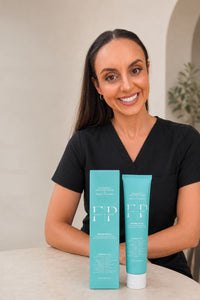
Oral Health Therapist (Bachelor of Oral Health Therapy, University of Newcastle, 2017), 9 years of clinical experience. Founder of Flossy & Pure.
Related reading
- SLS-free toothpaste: why the foam does nothing
- What makes a toothpaste truly natural?
- Toothpaste ingredients to avoid
Not sure which formula suits you? Take the Enamel Check, a free 60-second quiz from an Oral Health Therapist.
We use 3% nano-hydroxyapatite. Our toothpaste is SLS-free and fluoride-free. We publish our percentage, which most of this category will not.