


It can suit kids well, if you know what to look for. "No fluoride" tells you what was taken out, not what went in.
That is the whole answer, and it is not the one most of this category wants to give you. Read the ingredient panel, not just the front of the pack.
Here is what to look for, and when I would follow your dentist and stay with fluoride.
Start with your dentist's advice
Choosing a toothpaste for your child is a personal decision, and the best person to help you make it is your child's dentist or Oral Health Therapist. They can see your child's teeth, and a blog post cannot.
Why small children specifically
Guidance on toothpaste amounts exists because small children cannot spit.
Swallowing develops before spitting does. A two-year-old will swallow most of what goes in. A four-year-old will swallow some. By six or seven most children can spit if they have been taught. Add that children's toothpaste is made to taste pleasant and you have a product a proportion of its users treat as food.
Hence the standard Australian guidance, where the amount matters as much as the concentration:
- Under 18 months: no toothpaste. Soft brush and water.
- 18 months to 6 years: a pea-sized amount of low-fluoride children's toothpaste, around 400 to 550 ppm, supervised, spitting rather than rinsing.
- 6 years and over: standard family toothpaste, supervised until technique is reliable.
Check current advice with the Australian Dental Association or your child's dentist, since it is periodically updated and can differ for individual children.
Following it perfectly, twice a day, with a child who is not cooperating, is harder in practice than on paper.
Why parents look for alternatives
Nine years of these conversations and the reasons are consistent. None of them are unreasonable.
- Brushing time is a battle. "Just make sure they spit" is not useful advice for a three-year-old mid-tantrum, and parents want one gentle tube they feel good about.
- They want one tube for the whole family. Fewer tubes in the bathroom and one ingredient list to check.
- They want fewer synthetic ingredients generally. Often this is as much about SLS, colours and sweeteners as about fluoride.
- Something about the current tube puts them off. Strong mint, heavy foam, refusal to brush. Frequently it turns out to be the flavour or the detergent.
The mistake I see most
A great many "natural" and fluoride-free children's toothpastes don't tell you what they are built around. Flavour, foam, a mild abrasive, a humectant. They clean mechanically, which is not nothing, but there is no named key ingredient to compare.
Look past "fluoride-free" on the front and check what the paste is actually made of.
What a fluoride-free children's toothpaste needs
A named key ingredient. In ours that is nano-hydroxyapatite, a mineral that occurs naturally in teeth and bones, which gives a smooth, polished, clean feel. Background in how nano-hydroxyapatite works.
A stated percentage. Many products list the ingredient without saying how much. Ask. A brand that will not answer has told you something. We use 3% nano-hydroxyapatite.
No SLS. A foaming detergent that irritates the mouth lining and is a documented trigger for recurrent ulcers. Children's mouths are smaller and their tissue is more delicate. Full rundown in toothpaste ingredients to avoid.
Low abrasivity. Newly erupted enamel is still maturing. It does not need whitening agents, and no child needs a whitening toothpaste.
Xylitol is a nice extra. It sweetens without sugar.
A flavour they will accept. I mean this seriously. The best-formulated toothpaste on earth does nothing sitting in a cupboard because your child refuses it. Consistency beats optimisation, and strong mint is one of the most common reasons a child fights brushing.
When I would not go fluoride-free
I would rather say this than not.
If your child has had fillings, wears orthodontic appliances, has a dry mouth from medication, or their dentist has recommended fluoride, use fluoride and follow their advice, including on strength.
Fluoride-free is a personal preference. It is not right for every child, and a brand that tells you otherwise is selling rather than advising.
The bottom line
A fluoride-free toothpaste can suit children well when you know what is in it. Look for a named key ingredient at a stated percentage, a gentle flavour, and no SLS. Ours is a mild mint that suits the whole family.
Read the panel. Find the key ingredient and its percentage. And if your child has any dental concern, talk to your dentist or Oral Health Therapist before changing anything.
Frequently asked questions
Can toddlers use fluoride-free toothpaste?
Yes. Follow the amount guidance above and supervise until they can spit reliably. Look for a gentle formula with a named key ingredient, such as nano-hydroxyapatite, and follow your dentist's advice if they have recommended fluoride.
At what age can children use adult toothpaste?
Australian guidance generally moves children to standard family toothpaste from around age six, with supervision until technique is reliable. Our fluoride-free formula is not graded by age, so the same tube suits the whole household.
Does my child need a separate children's toothpaste?
Not necessarily. Fluoride toothpastes come in age-graded strengths, so follow the label and your dentist. A fluoride-free formula made for the whole family, like ours, means one tube for everyone, with a smaller amount for little ones.
How much toothpaste should a child use?
None under 18 months. A pea-sized amount from 18 months to six years, supervised. Adult amounts from around six. Check with your child's dentist for advice about your child.
What if my child swallows some toothpaste?
Little ones swallow some toothpaste while they learn to spit, which is why the amount is kept small and brushing is supervised. If a child has swallowed a large quantity of any toothpaste, contact the Poisons Information Centre on 13 11 26.
Flossy & Pure toothpaste is a cosmetic product and is not intended to diagnose, treat, cure or prevent any disease. For advice about your own teeth, speak with your dentist or Oral Health Therapist.
References
Meyer F, Enax J, Amaechi BT, et al. Hydroxyapatite as remineralization agent for children's dental care. Frontiers in Dental Medicine. 2022;3:859560.
Australian Dental Association. Fluoride and oral health guidance.
Do LG, Spencer AJ. Contemporary multilevel analysis of the effectiveness of water fluoridation in Australia. Australian and New Zealand Journal of Public Health. 2015;39(1):44-50.
Limeback H, Enax J, Meyer F. Biomimetic hydroxyapatite and caries prevention: a systematic review and meta-analysis. Canadian Journal of Dental Hygiene. 2021;55(3):148-159.
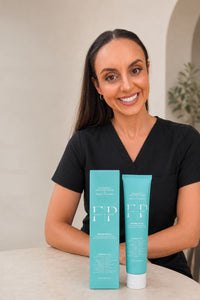
Oral Health Therapist (Bachelor of Oral Health Therapy, University of Newcastle, 2017), 9 years of clinical experience. Founder of Flossy & Pure.
Related reading
Not sure which formula suits you? Take the Enamel Check, a free 60-second quiz from an Oral Health Therapist.
We use 3% nano-hydroxyapatite. Our toothpaste is SLS-free and fluoride-free. We publish our percentage, which most of this category will not.